Hiring a salesperson for a solar or heat pump business is easy. Hiring one who sells well, sells honestly and is still with you in a year is hard. Most owners have a story about a rep who talked a great game in the interview, sold two jobs in three months and left.
This post is about finding and keeping the right people: why your brand affects who applies, how to structure pay, how to interview for the real job, what the first 90 days should look like, and what actually makes good reps stay. If you are still deciding whether you need a rep at all, read when to hire your first salesperson first.
Why your brand matters when recruiting reps
Good salespeople interview you as much as you interview them. Before they reply to your advert, most will look you up. They are asking one question: can I make money here?
What they look at:
- Your reviews. A rep's income depends on homeowners trusting the company. A firm with 15 reviews and a couple of angry ones is harder to sell for than one with hundreds of recent, specific reviews. Creativ UK grew from 37 reviews to 211 (4.7 average) by asking every customer on every job. That kind of proof helps sales and recruiting at the same time.
- Your advertising. If they can see you running your own ads with real customers and your own installs, they know leads are coming. If you appear to rely on bought leads, experienced reps know what that means: shared enquiries and price fights. We explain why in shared vs exclusive solar leads.
- Your people on camera. Videos of the owner, the installers and happy customers tell a candidate what the company is like to work for. They also make every visit easier, because the homeowner has already "met" the business.
- How you talk about selling. If your website and ads promise "free" panels or pressure-style deals, the reps you attract will sell that way. If they are clear and honest, you attract people who want to sell that way too.
In short, the work that builds trust with homeowners also builds trust with candidates. A recognisable local brand with steady, exclusive leads is the strongest recruiting advert you have.
Write the job advert around the truth
Strong candidates are put off by vague adverts that promise "unlimited earnings". Be specific:
- What they sell (solar, batteries, heat pumps, or a mix) and the typical job value.
- Where the leads come from and how many appointments a week a rep typically runs.
- Whether appointments are pre-qualified and pre-booked, or the rep has to self-generate.
- The pay structure in plain numbers: base, commission rate, when commission is paid.
- The patch and how much driving is involved.
- What support they get: CRM, training, a manager, a survey team.
"Pre-booked, qualified appointments from our own campaigns, in a defined area" is the line good reps look for.
A pay plan that keeps good reps and filters bad ones
Pay drives behaviour, so design it on purpose. The figures below are illustrative, not a recommendation for your area.
| Element | Example | Why |
|---|---|---|
| Base pay | A modest basic salary | Keeps reps through a slow fortnight and widens the pool of good candidates |
| Commission | A percentage of the job value or a fixed amount per kW or per system | Rewards results |
| When commission is paid | After installation, not at signature | Encourages honest selling and fewer cancellations |
| Clawback | Commission reversed if the job cancels within the cooling-off period | Fair to both sides if clearly written |
| Discount rule | Commission reduces if the rep discounts beyond an agreed limit | Protects margin |
| Accelerator | Higher rate above a monthly target | Rewards your best people for staying |
Two warnings. Commission-only roles attract fewer strong candidates and lose them as soon as leads dip. And employment status is not decided by what the contract calls someone. On GOV.UK's guidance, a person who works for you personally and is not genuinely self-employed is a worker, workers are entitled to the minimum wage, and an agreement can't waive that. Get advice if you are unsure. Remember right to work checks too, before employment starts.
Interview for the real job
Most sales interviews test how well someone talks about selling. Test the selling instead.
- Short phone screen (15 minutes). Are they clear, curious and on time? Do they ask about leads and pay structure? Good reps always do.
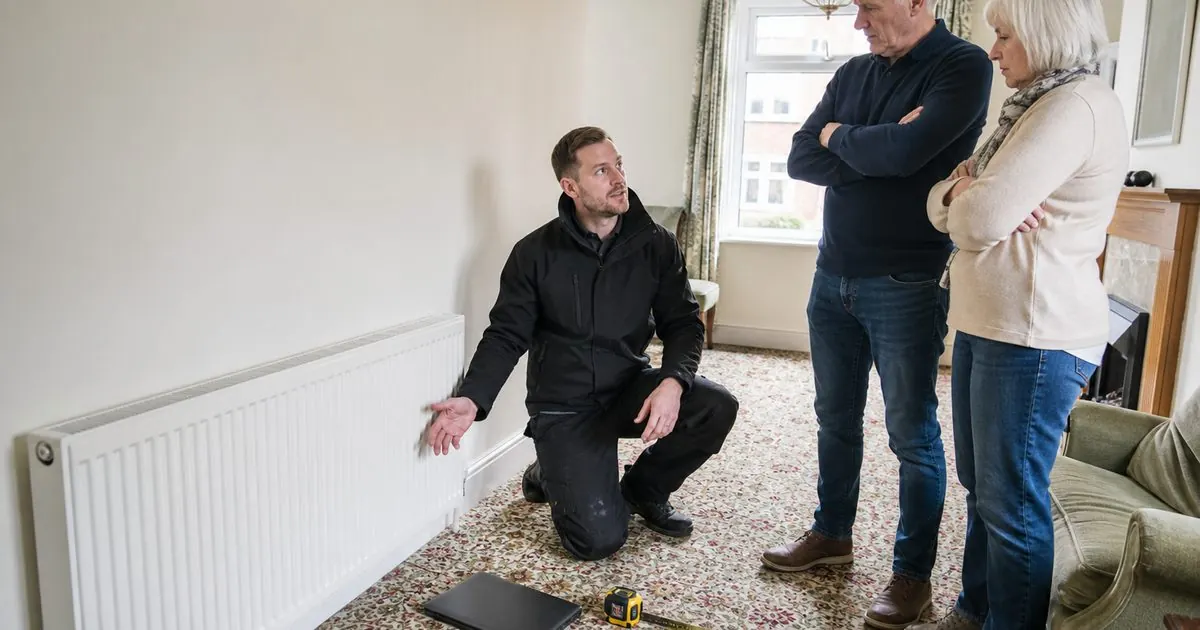
- Role-play your actual visit (45 minutes). You play a homeowner with a real objection: "We've had two other quotes and one was £2,000 cheaper." Watch whether they ask questions first or start defending price.
- Product learning test. Send them a two page summary of a battery or heat pump system the day before. See how much they retain and whether they explain it simply.
- Ride-along or shadow day. Paid if it is a full day. Watch how they speak to your installers and office staff as well as the customer.
- References from a manager, not a friend. Ask: "Would you hire them again, and what did they need most help with?"
Red flags: big income claims with no detail, blaming every past employer, no questions about how the customer pays, and anyone who calls a cooling-off period "a nuisance".
The first 90 days
Most reps who leave in month three were never set up properly in month one.
- Weeks 1 to 2: product training, ride-alongs with you or your best rep, time with the install team on a real job. Learn the CRM.
- Weeks 3 to 6: run visits with a senior person alongside, then alone with a debrief after each. Start on your warmest leads, not the leftovers.
- Weeks 7 to 12: full diary, weekly one-to-one, one recorded or role-played visit reviewed each week.
Agree a target band for the 90 days in writing, for example "8 to 10 sat appointments a week and a close rate trending towards the team average". It gives you both a fair way to judge progress.
What actually keeps good reps
From what we see across installer sales teams, reps stay for the same handful of reasons:
- Enough qualified appointments, every week. Nothing loses a good rep faster than an empty diary. Steady lead flow is retention.
- Commission paid accurately and on time. One late or disputed payment does lasting damage.
- Fair lead allocation. Leads routed by postcode and visible in the CRM stop arguments about who got the best ones.
- Being coached, not just chased. A weekly conversation about one skill beats a weekly telling-off about one number. Our post on setter and sales team reporting shows how to read the numbers fairly.
- A company they are proud to sell. Good installs, good reviews and an owner who backs them up when a customer is wrong.
If hiring isn't the right answer yet
Recruiting, training and managing reps takes time many owners don't have. Some installers start with closers provided for them instead. Our sales closing service does this: we put closers on your booked appointments, and that approach took Eco2u Ltd from zero to a £250,000 a month business. The trade-offs are covered in outsourced setters and closers.
Talk to us
If you want to build a sales team for your solar and battery or heat pump business, book a free video call with Tom. We will look at your lead flow, your brand from a candidate's point of view, and whether hiring or outsourced closing makes more sense right now.
Sources
Questions owners ask
Where do solar and heat pump firms find good sales reps?
The best candidates often come from adjacent trades with in-home selling experience, such as windows, kitchens or home security, from your own office or survey team, and from referrals by reps you already trust. Wherever they come from, judge them on a role-play of your real visit, not on their stories about past numbers.
Why do solar sales reps leave so quickly?
The common reasons are not enough leads, poor quality leads, commission that is late or clawed back unfairly, and a manager who only talks to them about missed targets. Most of those are within the owner's control. Steady, qualified appointments and commission paid on time do more for retention than any team night out.